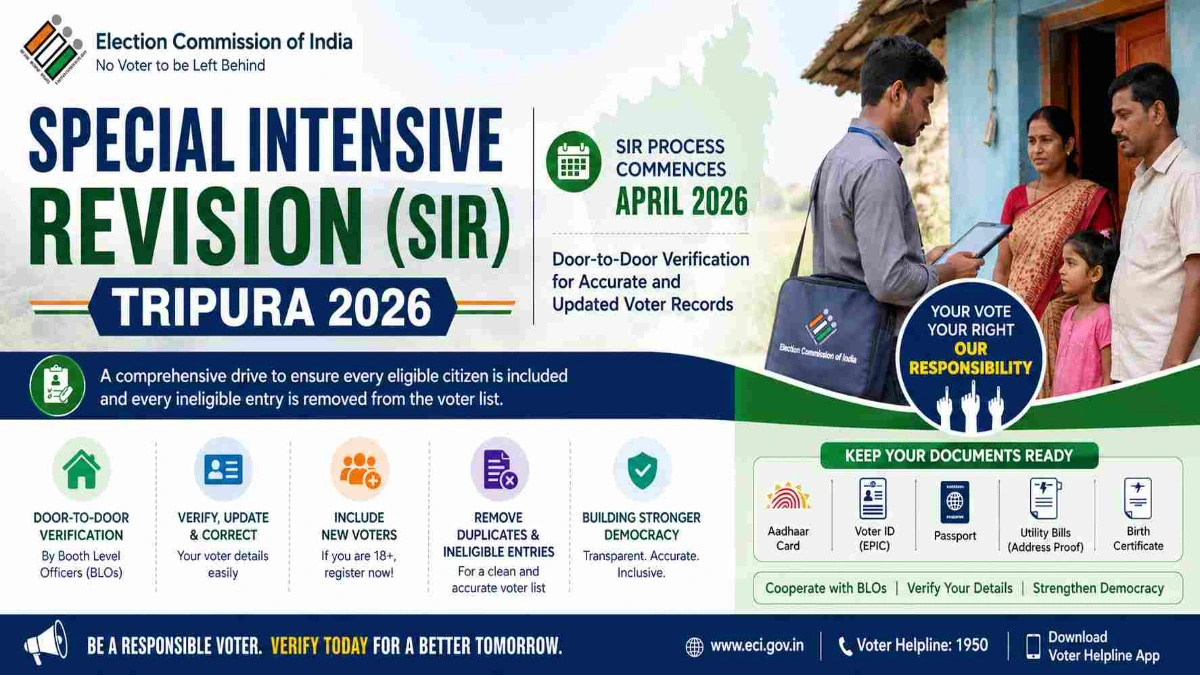
Special Intensive Revision (SIR) in Tripura 2026: ECI Begins Door-to-Door Voter Verification
 RAKHAL DAS
Special Intensive Revision (SIR): Tripura Prepares for Major Electoral Roll Verification Drive in 2026
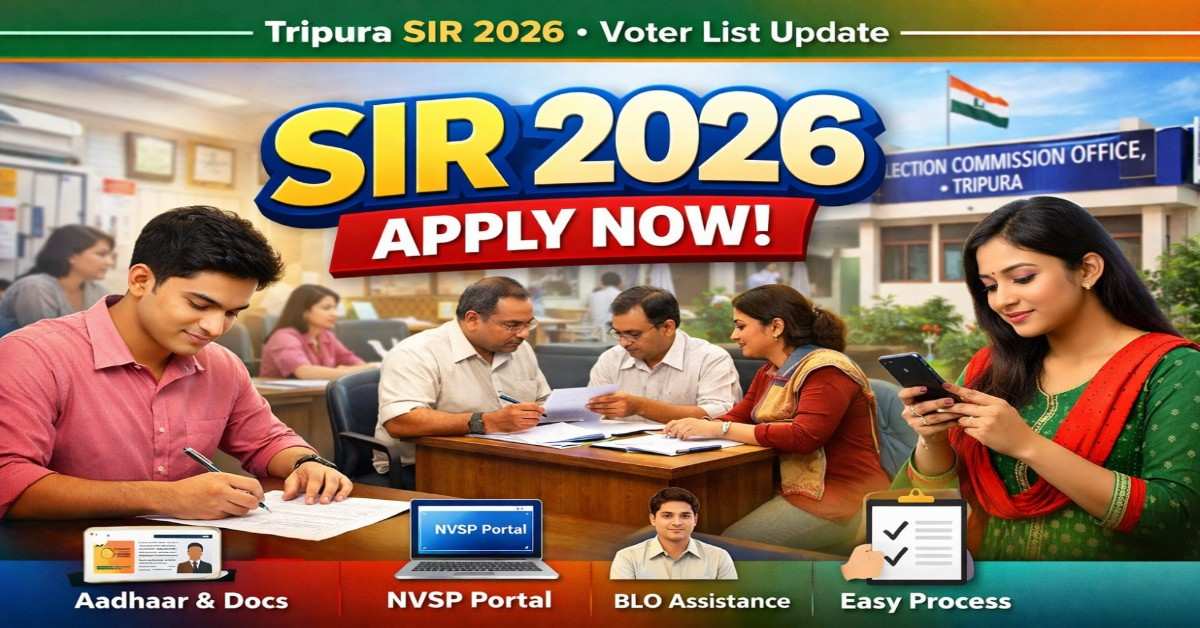
The Election Commission of India (ECI) has instructed the Tripura government to begin preparations for the upcoming Special Intensive Revision (SIR) of electoral rolls, scheduled to commence in April 2026. According to the Chief Electoral Officer (CEO) of Tripura, the process will involve extensive door-to-door verification aimed at updating and correcting voter records across the state.
The announcement marks a significant step toward ensuring clean, transparent, and error-free electoral rolls before future elections. Electoral rolls are the foundation of democratic elections in India, and maintaining their accuracy is essential for free and fair voting.
The Special Intensive Revision process is expected to involve election officials, Booth Level Officers (BLOs), local administration, and various government departments. Through direct household visits, authorities will verify voter identities, remove duplicate or ineligible names, and include eligible citizens who are not yet registered.
This article provides a complete overview of the Special Intensive Revision (SIR) in Tripura, its objectives, procedures, benefits, challenges, and what voters should expect during the verification drive.
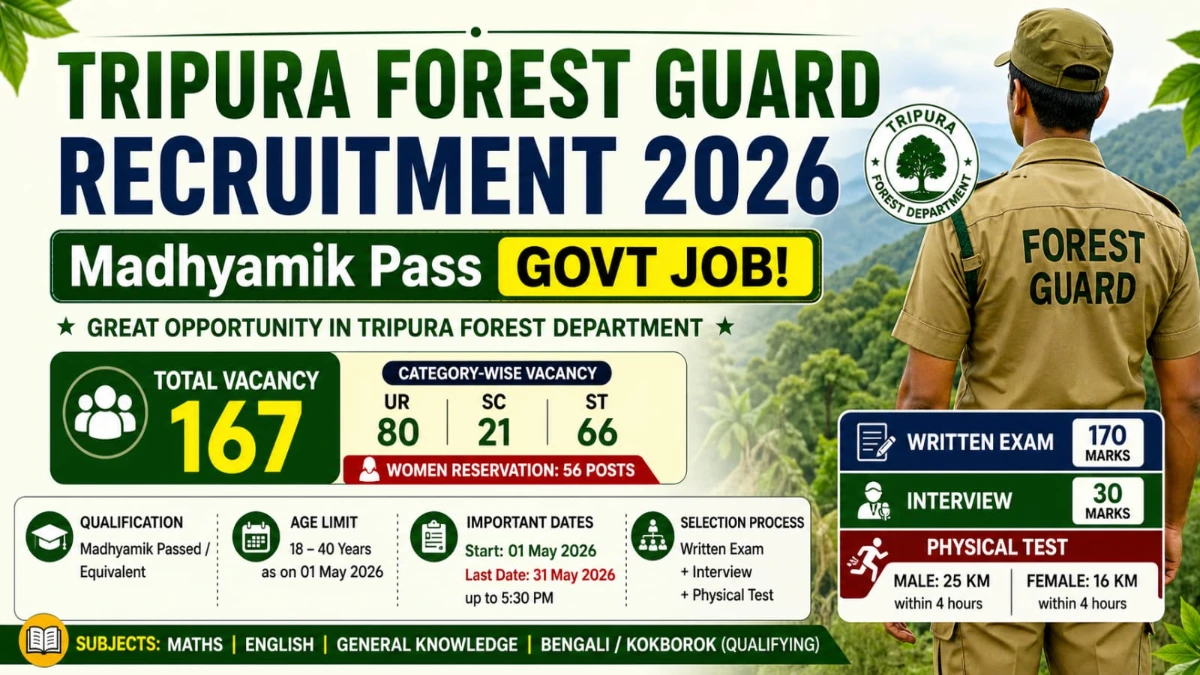
Read More this Article - Tripura Forest Guard Recruitment 2026 – Madhyamik Pass Govt Job | 167 Posts Apply Now
What is Special Intensive Revision (SIR)?
Special Intensive Revision (SIR) is a detailed verification process conducted by the Election Commission of India to update electoral rolls comprehensively. Unlike routine annual revisions, SIR involves physical field verification through door-to-door visits by election officials.
The primary goal of SIR is to ensure that the electoral database remains accurate, updated, and free from irregularities such as:
- Duplicate voter entries
- Fake voter identities
- Deceased voters still listed
- Shifted voters remaining in old constituencies
- Missing eligible voters
- Incorrect addresses or demographic details
The revision process becomes particularly important before major elections, ensuring that every eligible citizen can exercise their democratic right without administrative issues.
Why is SIR Important in Tripura?
Tripura is a politically active northeastern state where voter participation plays a crucial role in determining election outcomes. Over time, population movement, urbanization, migration, and demographic changes can create discrepancies in voter lists.
The Special Intensive Revision aims to address these issues comprehensively.
Key Reasons Behind the SIR Initiative
1. Maintaining Accurate Electoral Rolls
Electoral rolls form the backbone of democratic elections. Inaccuracies can lead to disputes, allegations, and administrative confusion during polling.
2. Inclusion of New Voters
Many young citizens who become eligible at the age of 18 often remain unregistered due to lack of awareness or documentation issues. SIR will help include these first-time voters.
3. Removal of Duplicate Entries
Sometimes voters may remain registered in multiple constituencies after shifting residence. The door-to-door verification process helps eliminate such duplication.
4. Strengthening Electoral Transparency
A verified voter list improves public trust in the electoral process and strengthens democratic institutions.
5. Preparation for Future Elections
The revision process ensures that upcoming elections in Tripura are conducted smoothly with updated voter information.
Role of the Election Commission of India (ECI)
The Election Commission of India is the constitutional authority responsible for supervising elections in the country. It regularly conducts electoral roll revisions to maintain the integrity of the voting process.
For the 2026 Special Intensive Revision in Tripura, the ECI has directed the state administration and the Chief Electoral Officer to begin preparations well in advance.
The ECI’s responsibilities include:
- Issuing revision guidelines
- Monitoring implementation
- Training election officials
- Supervising Booth Level Officers
- Ensuring transparency
- Resolving electoral disputes
- Conducting awareness campaigns
The commission’s initiative reflects its commitment to improving electoral governance through systematic verification.
Chief Electoral Officer Tripura and Administrative Preparations
According to the Chief Electoral Officer (CEO) of Tripura, preparations are already underway for the statewide verification drive.
The administration is expected to:
- Deploy Booth Level Officers (BLOs)
- Coordinate with district administrations
- Conduct training programs
- Prepare updated polling station data
- Digitize voter records
- Launch awareness campaigns
- Monitor field verification activities
The CEO’s office will coordinate closely with local authorities to ensure that every household in Tripura is covered during the verification process.
How the Door-to-Door Verification Process Will Work
One of the most important features of the Special Intensive Revision is the door-to-door verification system.
Step-by-Step Verification Process
Step 1: Assignment of Booth Level Officers
Each polling area will have designated Booth Level Officers responsible for field verification.
Step 2: Household Visits
Officials will visit homes physically to verify voter details.
Step 3: Verification of Identity
Residents may be asked to produce identification documents such as:
- Aadhaar Card
- EPIC/Voter ID
- Birth Certificate
- Passport
- PAN Card
- Driving License
- Utility Bills
Step 4: Updating Information
Any incorrect or outdated information will be corrected during the process.
Step 5: Inclusion of New Voters
Eligible citizens who have turned 18 can apply for voter registration.
Step 6: Deletion of Ineligible Entries
Names of deceased or permanently shifted voters may be removed after proper verification.
Step 7: Publication of Draft Electoral Rolls
A draft voter list will be released for public review and objections.
Step 8: Final Electoral Roll Publication
After resolving claims and objections, the final voter list will be published.
Importance of Booth Level Officers (BLOs)
Booth Level Officers play a central role in the SIR process. They are grassroots election workers responsible for direct interaction with voters.
Responsibilities of BLOs
- Visiting households
- Verifying voter information
- Assisting new registrations
- Correcting electoral data
- Reporting irregularities
- Educating citizens about voting rights
Their field-level work ensures the accuracy and credibility of electoral rolls.
Documents Required During Verification
Citizens may need to provide valid documents during the verification drive.
Commonly Accepted Documents
Proof of Identity
- Aadhaar Card
- Passport
- PAN Card
- Driving License
Proof of Residence
- Electricity Bill
- Water Bill
- Gas Connection Document
- Rent Agreement
- Bank Passbook
Proof of Age
- Birth Certificate
- School Certificate
- Aadhaar Card
Providing accurate documents will help officials complete verification efficiently.
Benefits of Special Intensive Revision (SIR)
The SIR initiative offers several benefits to voters, election authorities, and the democratic process.
1. Cleaner Electoral Rolls
The process removes fake and duplicate entries, making voter lists more reliable.
2. Better Election Management
Updated records help authorities manage polling stations effectively.
3. Inclusion of Eligible Citizens
The drive ensures that all eligible voters can participate in elections.
4. Reduced Electoral Fraud
Accurate voter lists reduce the possibility of impersonation or illegal voting.
5. Increased Public Trust
Transparent verification improves citizens’ confidence in the election system.
6. Enhanced Digital Records
The process supports modernization and digitization of electoral databases.
Challenges Expected During the SIR Process
Despite its importance, the Special Intensive Revision process may face several challenges.
1. Remote Areas and Accessibility
Tripura has hilly and remote regions where physical verification may be difficult.
2. Migration and Urban Movement
Frequent migration can complicate address verification.
3. Lack of Documentation
Some residents may not possess valid identity or residence documents.
4. Public Awareness Issues
Not all citizens may understand the importance of voter verification.
5. Language and Communication Barriers
Different linguistic communities may require localized communication strategies.
6. Time Constraints
Completing statewide verification within a fixed timeline requires efficient coordination.
Digital Technology in Electoral Roll Revision
The Election Commission is increasingly using digital systems to modernize electoral management.
Technological Support Expected in SIR 2026
Online Voter Services
Citizens can update voter details through digital portals.
Mobile Applications
Apps may help track verification progress and voter status.
Digital Mapping
GIS and digital polling station mapping can improve administrative planning.
Data Synchronization
Cross-checking with government databases can reduce duplicate entries.
QR-Based Verification
Future systems may integrate QR codes and digital identity verification.
Technology can significantly improve the efficiency and transparency of electoral roll revisions.
Public Participation is Essential
The success of the Special Intensive Revision depends heavily on public cooperation.
Citizens are encouraged to:
- Cooperate with Booth Level Officers
- Keep documents ready
- Verify their voter details
- Inform authorities about errors
- Encourage eligible family members to register
- Participate in awareness programs
A proactive public response can help create a more accurate electoral system.
Impact on Democracy in Tripura
The Special Intensive Revision initiative is not just an administrative exercise; it directly strengthens democracy.
Democratic Significance
Fair Representation
Every eligible voter gets the opportunity to participate in governance.
Electoral Integrity
Verified voter lists reduce disputes and controversies.
Transparency
Door-to-door verification improves accountability.
Youth Participation
First-time voters can join the democratic process more easily.
Inclusive Governance
Marginalized and remote communities can be better represented.
An accurate electoral roll ensures that elections truly reflect the will of the people.
Awareness Campaigns Likely Before SIR
The Election Commission and Tripura administration are expected to conduct awareness campaigns before the revision begins.
Possible Awareness Activities
- Social media campaigns
- Television advertisements
- Radio announcements
- School and college outreach
- Village meetings
- Posters and banners
- SMS alerts
- Community awareness drives
These campaigns will educate voters about the importance of verification and voter registration.
Importance for Young and First-Time Voters
One major objective of the Special Intensive Revision is to include newly eligible voters.
Young citizens turning 18 before the qualifying date should:
- Apply for voter registration
- Prepare required documents
- Participate in verification
- Understand their voting rights
Youth participation strengthens democratic institutions and ensures balanced representation.
Political Significance of Electoral Roll Revision
Electoral roll accuracy often becomes a major political issue before elections.
Political parties closely monitor revision processes because voter lists directly influence electoral participation.
The SIR process in Tripura may:
- Increase scrutiny from political parties
- Lead to claims and objections
- Trigger awareness campaigns by political organizations
- Influence election preparedness strategies
However, the Election Commission is expected to maintain neutrality and transparency throughout the process.
Citizens’ Rights During Verification
Voters have several important rights during the SIR process.
Rights of Citizens
- Right to apply for voter inclusion
- Right to correct voter information
- Right to object to incorrect entries
- Right to appeal decisions
- Right to receive fair treatment
- Right to access draft electoral rolls
Citizens should remain informed and actively participate in the revision process.
How to Check Voter Details
Voters can generally verify their electoral details through:
- Official Election Commission websites
- State CEO portals
- Voter helpline apps
- Electoral registration offices
- BLO assistance
Digital access to voter information makes the process more convenient for citizens.
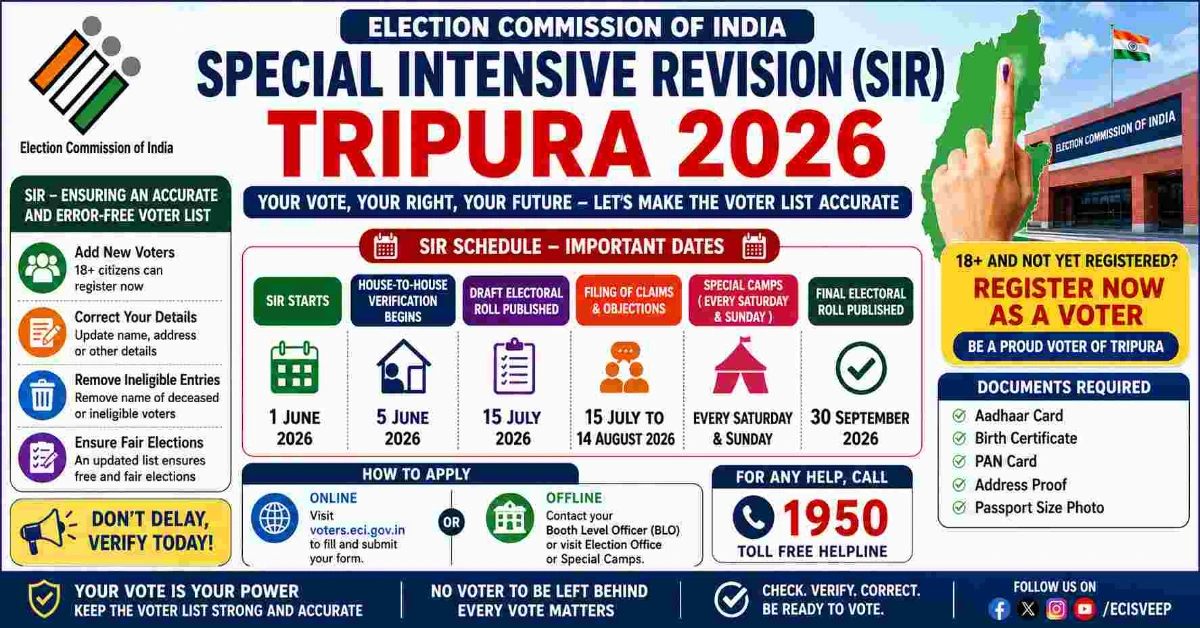
Expected Timeline of SIR 2026 in Tripura
Although detailed schedules may be released later, the process is expected to begin in April 2026.
Likely Stages
| Stage | Expected Activity |
|---|---|
| Preparation Phase | Training and planning |
| April 2026 | Start of door-to-door verification |
| Draft Roll Publication | Public review period |
| Claims & Objections | Correction process |
| Final Roll Publication | Updated electoral list release |
The exact timeline may vary depending on administrative decisions and field conditions.
Importance of Accurate Voter Lists
Electoral rolls affect every stage of elections.
Why Accuracy Matters
- Prevents voter impersonation
- Reduces legal disputes
- Improves polling efficiency
- Enhances democratic legitimacy
- Ensures equal representation
Without accurate voter records, election credibility can suffer significantly.
The Future of Electoral Reforms in India
The Special Intensive Revision reflects broader electoral reform efforts in India.
Future reforms may include:
- Fully digital electoral management
- AI-based duplicate detection
- Biometric-linked verification systems
- Faster online corrections
- Integrated national voter databases
- Improved cybersecurity measures
India’s election system continues evolving to meet the demands of a large and dynamic democracy.
Conclusion
The Special Intensive Revision (SIR) scheduled to begin in Tripura in April 2026 represents an important step toward strengthening electoral transparency and democratic participation.
By conducting door-to-door verification, the Election Commission of India aims to ensure that electoral rolls remain accurate, inclusive, and free from irregularities. The initiative will help remove duplicate entries, include eligible voters, and improve the integrity of future elections.
The success of the process will depend on effective administrative coordination, technological support, and public cooperation. Citizens are encouraged to actively participate, verify their details, and assist election officials during the revision drive.
As Tripura prepares for the Special Intensive Revision, the initiative highlights the continuing efforts of India’s electoral system to maintain fairness, accountability, and trust in democracy.
FAQs on Special Intensive Revision (SIR) in Tripura
1. What is Special Intensive Revision (SIR)?
Special Intensive Revision is a detailed voter list verification process conducted by the Election Commission of India to update electoral rolls through physical verification.
2. When will the SIR process start in Tripura?
According to the Chief Electoral Officer Tripura, the process is scheduled to commence in April 2026.
3. What is the purpose of door-to-door verification?
The purpose is to verify voter identities, remove duplicate or ineligible entries, and include eligible citizens in the electoral rolls.
4. Who will conduct the verification process?
Booth Level Officers (BLOs) and election officials will carry out the household verification process.
5. What documents may be required during verification?
Documents such as Aadhaar Card, Voter ID, Passport, utility bills, and birth certificates may be required.
6. Can new voters register during the SIR process?
Yes, eligible citizens who are 18 years or older can apply for voter registration.
7. Will duplicate voter entries be removed?
Yes, one major objective of SIR is to remove duplicate and fake voter entries.
8. How can voters check their electoral details?
Voters can check details through official Election Commission portals, voter apps, or local electoral offices.
9. Why is SIR important for democracy?
It ensures fair elections by maintaining accurate voter lists and strengthening public trust in the electoral system.
10. What should citizens do during the verification process?
Citizens should cooperate with officials, provide accurate documents, and verify their voter information carefully.
.jpeg)
.jpeg)
.jpeg)
.jpeg)
.jpeg)
.jpeg)
.jpeg)


.jpeg)








.png)

.png)