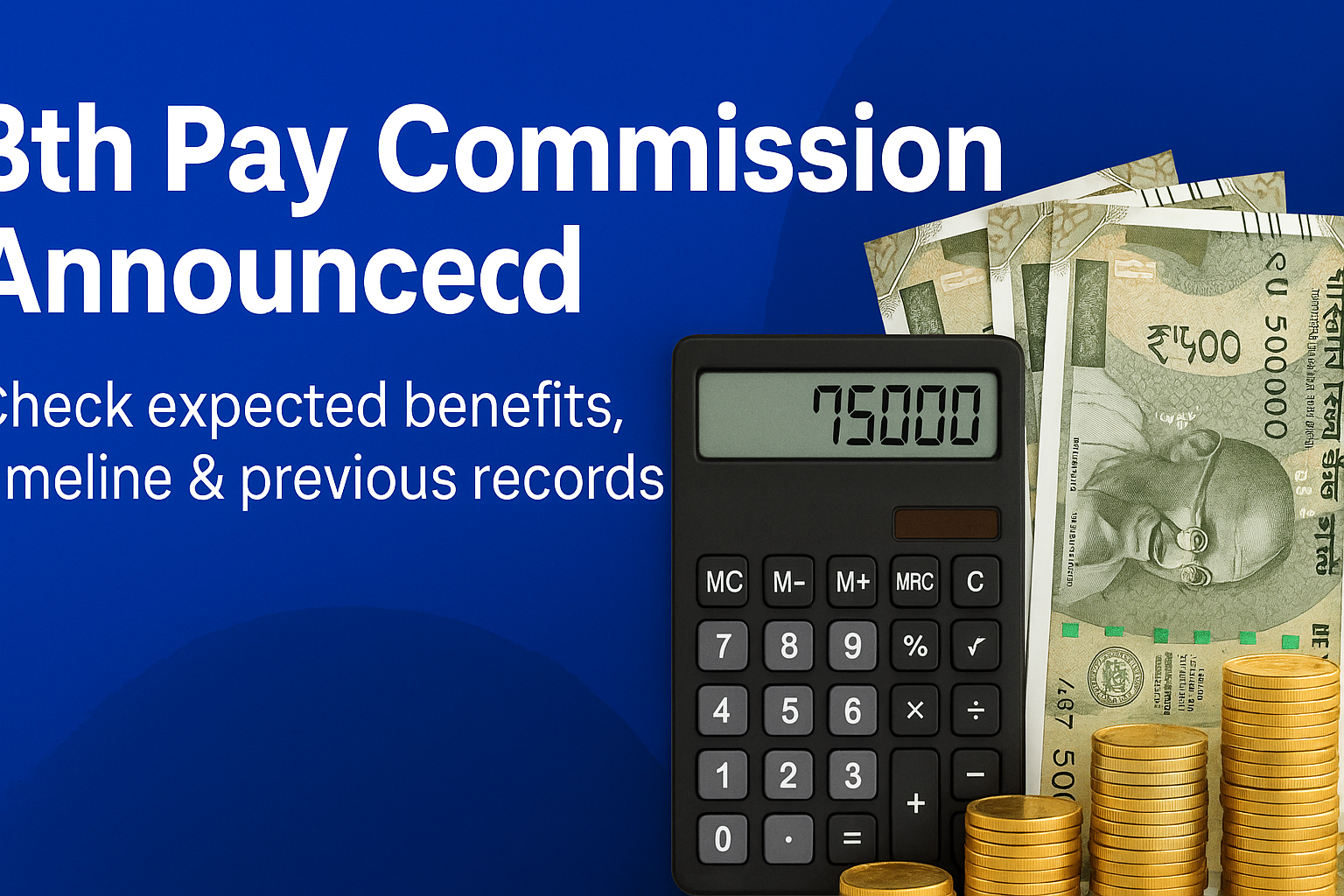
8th Pay Commission Latest News: What Central Government Employees Can Expect After Budget 2026
 Rakhal das
8th Pay Commission Latest News: What Central Government Employees Can Expect After Budget 2026
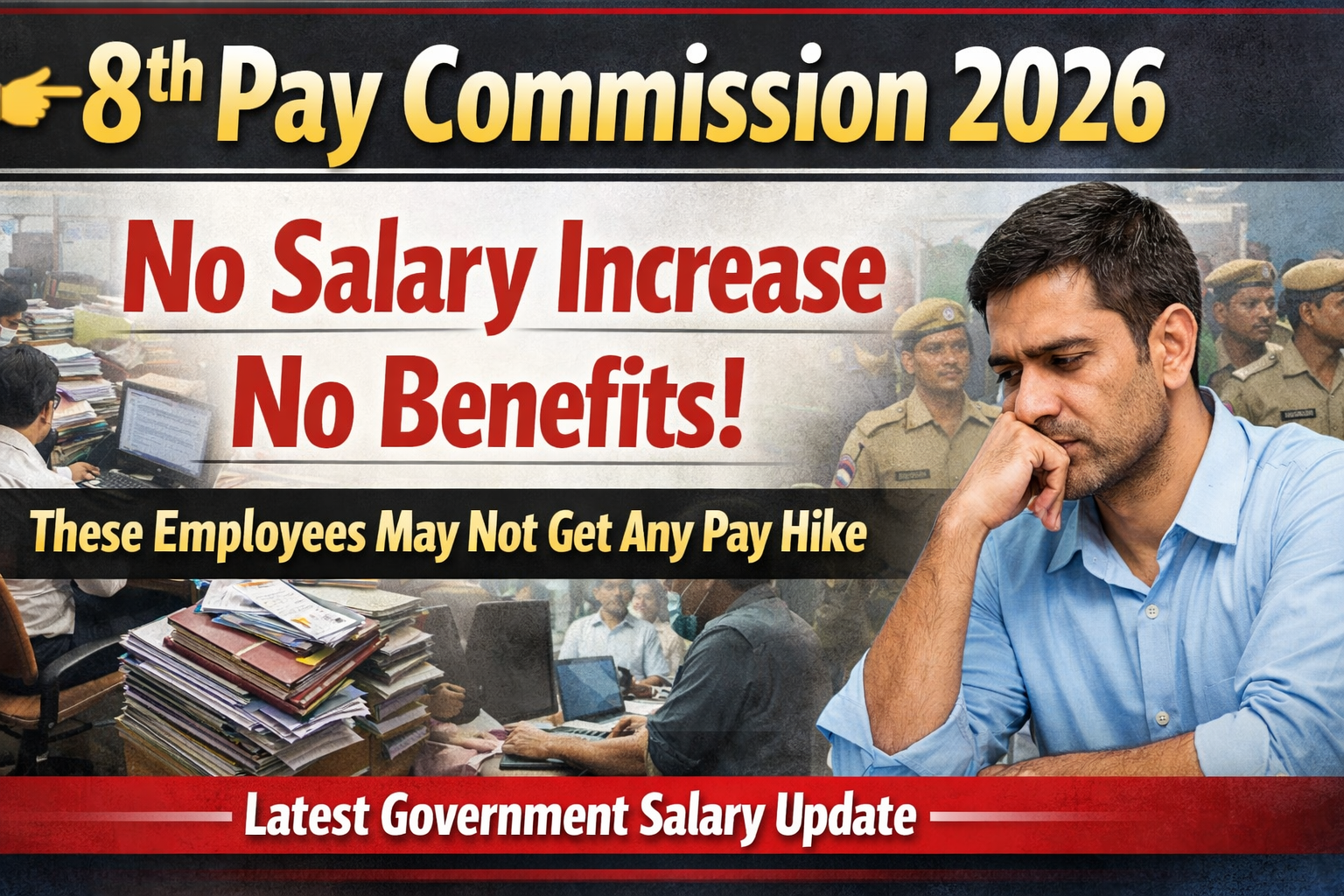
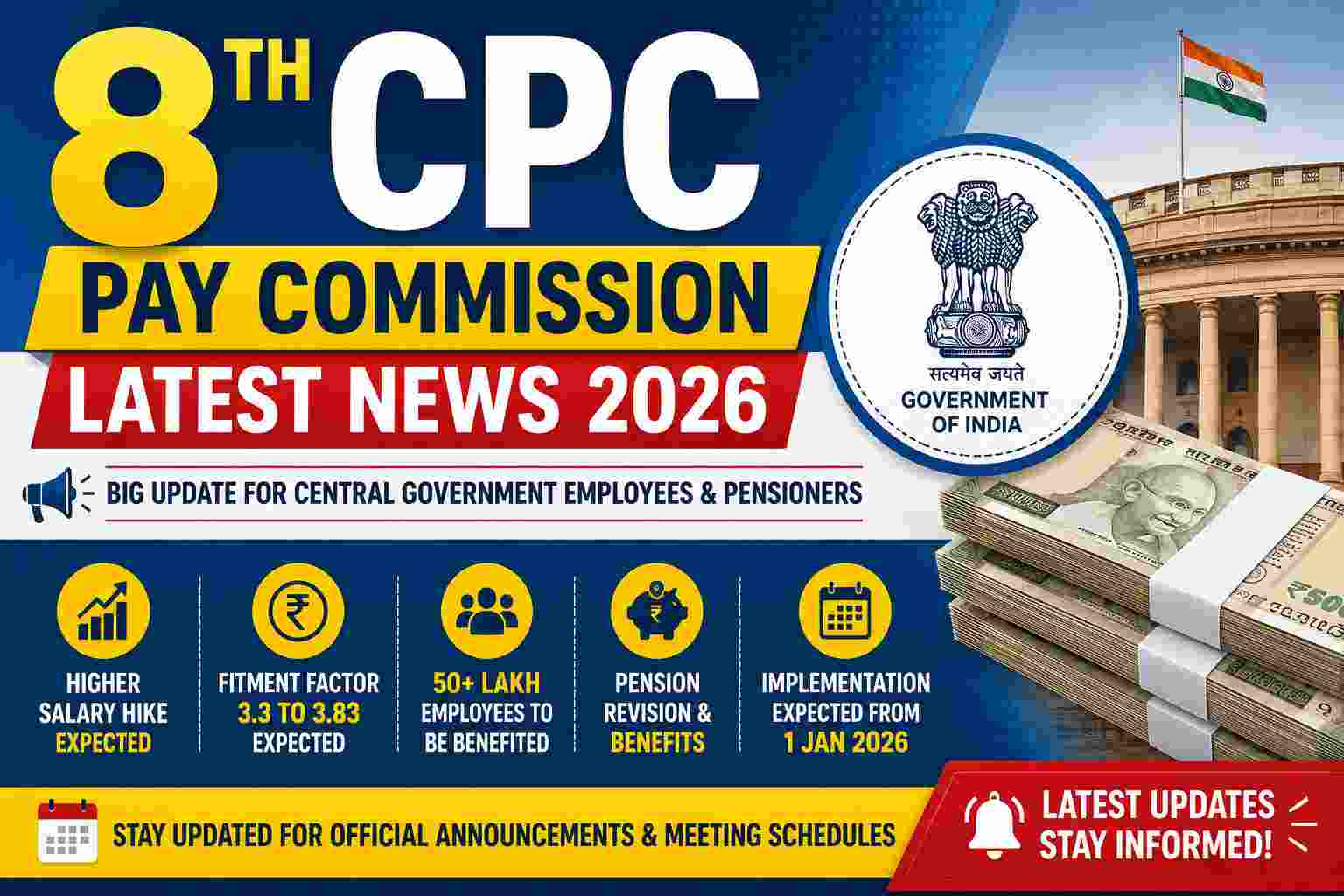
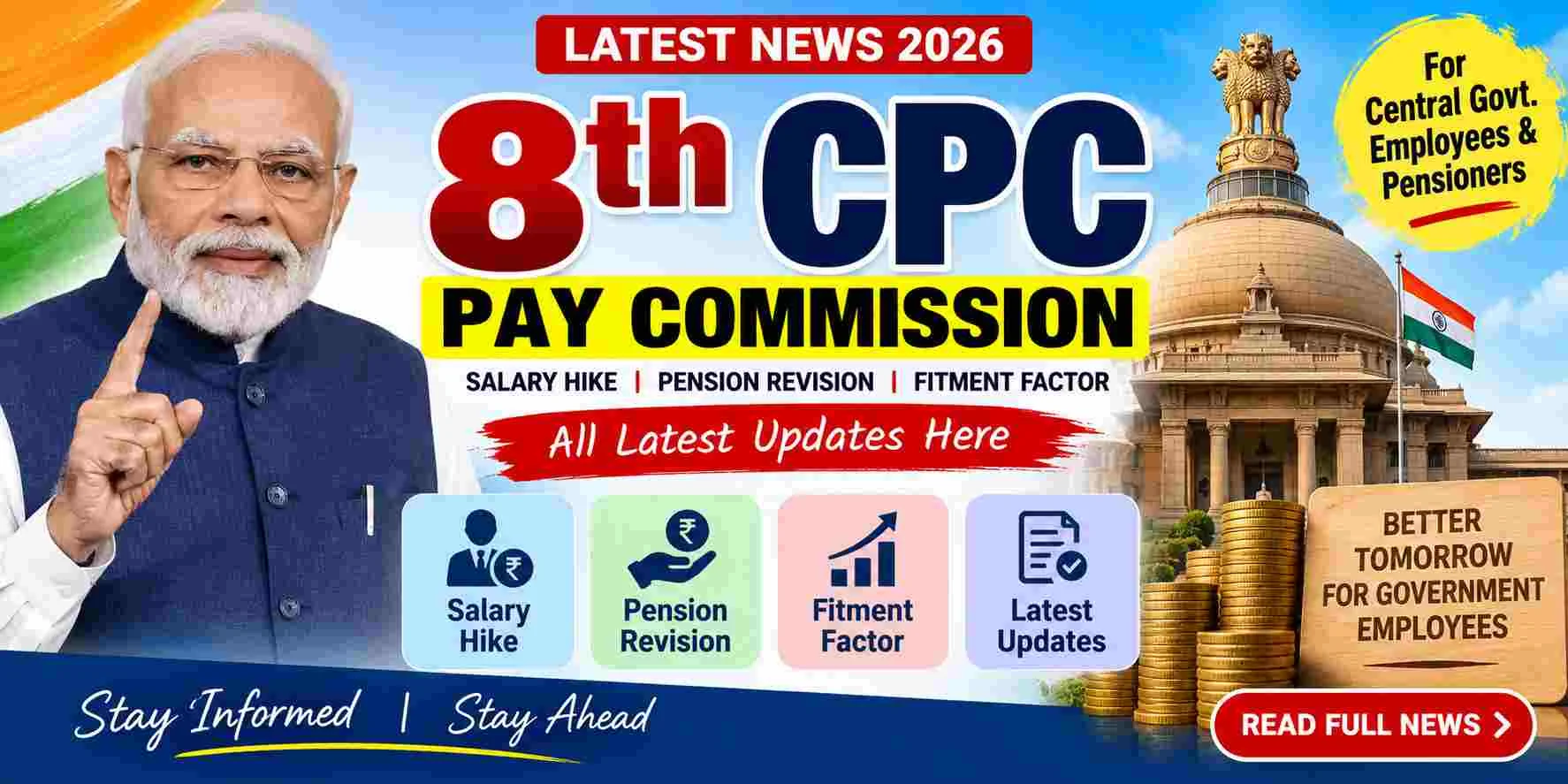
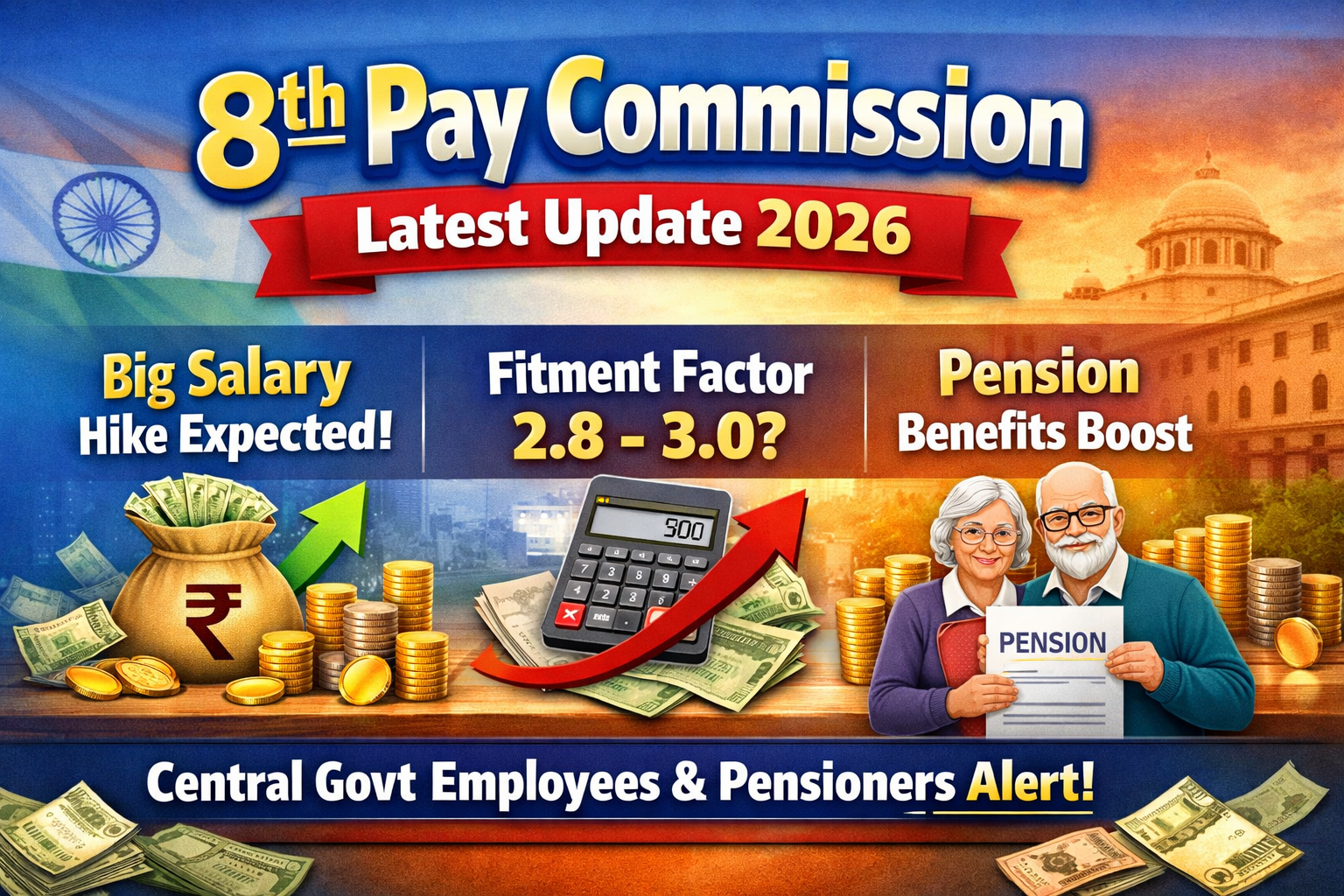
The 8th Pay Commission has become one of the most searched topics among central government employees and pensioners in 2026. For over a year, hopes were high that the new pay commission would bring major salary hikes, better pensions, and long-pending reforms. However, after the Union Budget 2026, disappointment has spread as no clear implementation announcement was made.
This silence from the government has triggered protests, strike notices, and renewed debates across departments. Employees are now asking one big question: When will the 8th Pay Commission actually benefit us?
This article explains the latest updates, union demands, government stance, DA situation, and what is realistically expected in the coming months.
What is the 8th Pay Commission?
The Pay Commission is a government body formed to review and recommend changes in:
-
Basic salary structure
-
Allowances (HRA, TA, etc.)
-
Pension system
-
Fitment factor
Earlier commissions like the 7th Pay Commission (2016) changed the lives of over 1 crore employees and pensioners. Naturally, expectations from the 8th Pay Commission (8th CPC) are very high.
The government has already indicated that the 8th CPC will replace the 7th CPC, but the final implementation roadmap is still unclear.
Budget 2026: The Turning Point
In the Union Budget 2026, there was no direct announcement regarding:
-
Implementation date
-
Salary hike percentage
-
Arrears payment
-
Interim relief
This created shock among employees because many expected at least a timeline or interim decision.
Instead, the government only stated that:
“The 8th Pay Commission has been mandated and its Terms of Reference are under process.”
For employees, this sounded more like a delay than a solution.
Strike Notice: Employees Escalate Pressure
After the budget, major employee federations announced a nationwide strike on 12 February 2026.
Their message is simple:
If the government doesn’t act, employees will.
This strike is expected to involve:
-
Railway employees
-
Defence civilian staff
-
Postal workers
-
BSF, CRPF, CISF civilian sections
-
Central secretariat staff
Unions say this is only the first phase, and stronger actions may follow if talks fail.
Key Demands of Central Government Employees
Here are the main demands being raised across unions:
1. Modify Terms of Reference (ToR)
Employees want the ToR of the 8th CPC to clearly include:
-
Pay matrix reform
-
Allowance restructuring
-
Pension reforms
2. Merge 50% DA with Basic Pay
Currently, DA is over 50%. Employees demand:
-
At least 50% DA should be merged into basic pay
-
This increases permanent salary and pension base
3. Interim Relief (IR)
Unions are asking for:
-
20% Interim Relief on pay/pension
-
Effective from 1 January 2026
-
Till final implementation
4. Arrears from 1 January 2026
If implementation is delayed, then:
-
Salary revision should be retrospective
-
Full arrears must be paid
DA Increase in 2026: Small Relief
While pay commission is delayed, DA is still active.
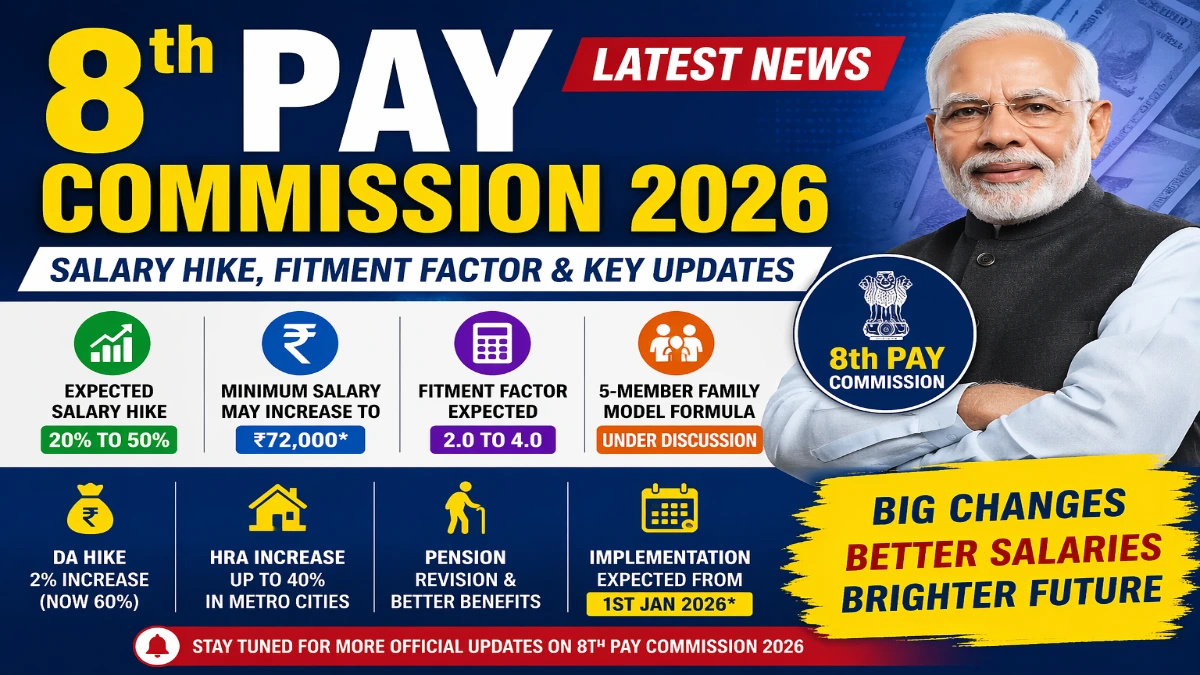
From January 2026, DA increased by 2%, based on CPI-IW data.
This means:
-
If DA was 50%, now it becomes 52%
-
Employees get a small monthly boost
-
Pensioners get higher Dearness Relief
However, unions say:
“DA is temporary. We want permanent basic pay increase.”
So DA hike helps today, but doesn’t solve long-term salary stagnation.
Expected Salary Hike: How Much Can You Get?
Experts estimate that under the 8th CPC:
-
Minimum basic pay may increase from ₹18,000 to ₹26,000 – ₹28,000
-
Fitment factor may be around 2.5 to 3.0
-
Overall salary hike could be 25% – 35%
Example:
| Current Basic | Expected Basic |
|---|---|
| ₹18,000 | ₹26,000+ |
| ₹35,000 | ₹50,000+ |
| ₹56,100 | ₹75,000+ |
(These are estimates, not official figures)
Why Government Is Delaying?
The main reason is fiscal burden.
Implementing 8th CPC fully may cost:
-
₹1.3 – ₹1.8 lakh crore annually
-
Long-term pension liabilities
-
Higher interest and debt pressure
The government wants:
-
Economic stability
-
Controlled inflation
-
Gradual implementation
So instead of one big shock, it may go for:
-
Interim relief first
-
Phased salary revision
-
Partial DA merger
Will Arrears Be Paid?
This is the biggest concern.
If implemented from 2026 but announced in 2027, then:
-
Employees will expect 12–18 months arrears
-
This can mean ₹1–5 lakh per employee depending on grade
Arrears are politically popular but fiscally heavy. So the decision will depend on elections, economy, and union pressure.
What Should Employees Do Now?
1. Follow Official Updates
Check:
-
Ministry of Finance
-
Department of Personnel (DoPT)
-
Pay & Accounts circulars
2. Keep Salary Records
For future arrears:
-
Keep payslips
-
Promotion orders
-
Pension revision letters
3. Participate in Union Communication
Unions often get early signals from ministries.
Most Likely Scenario (2026–2027)
Based on current trends, this is the realistic roadmap:
| Phase | What May Happen |
|---|---|
| Early 2026 | Strike & negotiations |
| Mid 2026 | Interim relief announced |
| Late 2026 | DA merger decision |
| 2027 | Final 8th CPC implementation |
| 2027–28 | Arrears payment |
.jpeg)
.jpeg)
.jpeg)
.jpeg)
.jpeg)
.jpeg)
.jpeg)


.jpeg)






.png)
.png)