Voluntary Retirement under NPS (UPS) — Eligibility, Notice, Payouts & Step-by-Step Process
 Rakhal das
Entitlement on Voluntary Retirement under the Unified Pension Scheme (NPS) — Step-by-Step SEO-Friendly Guide
Quick summary
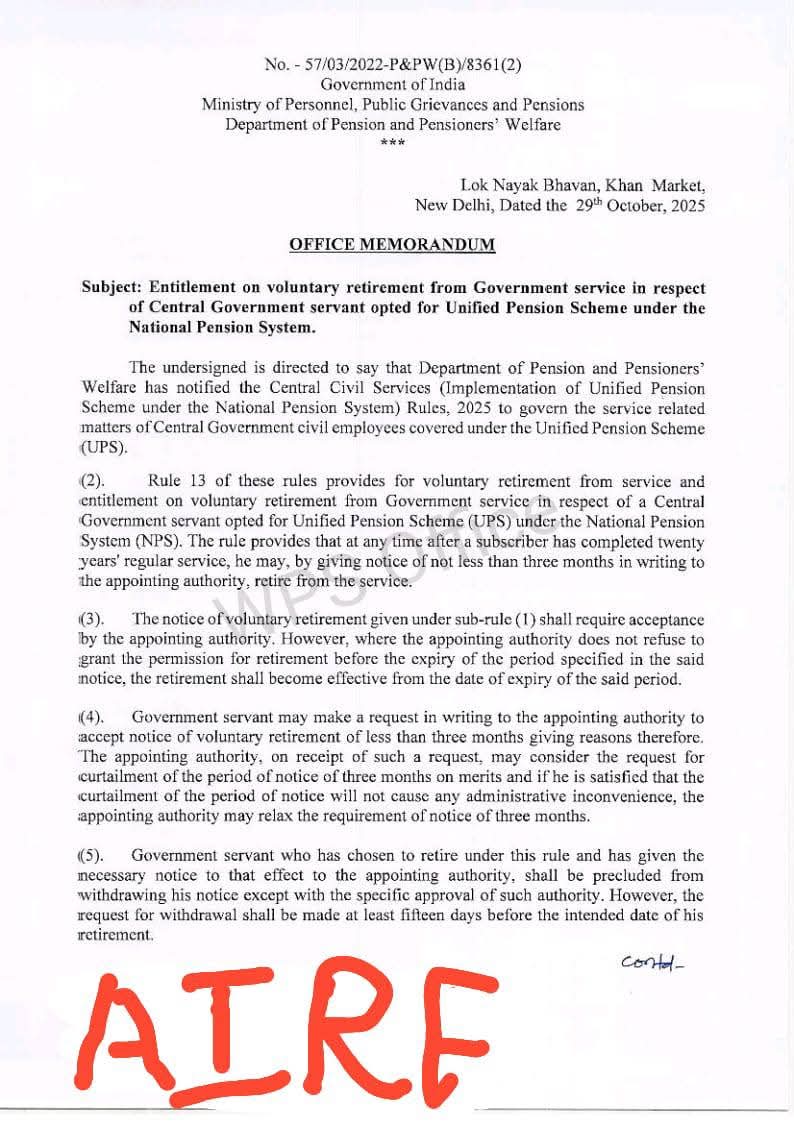
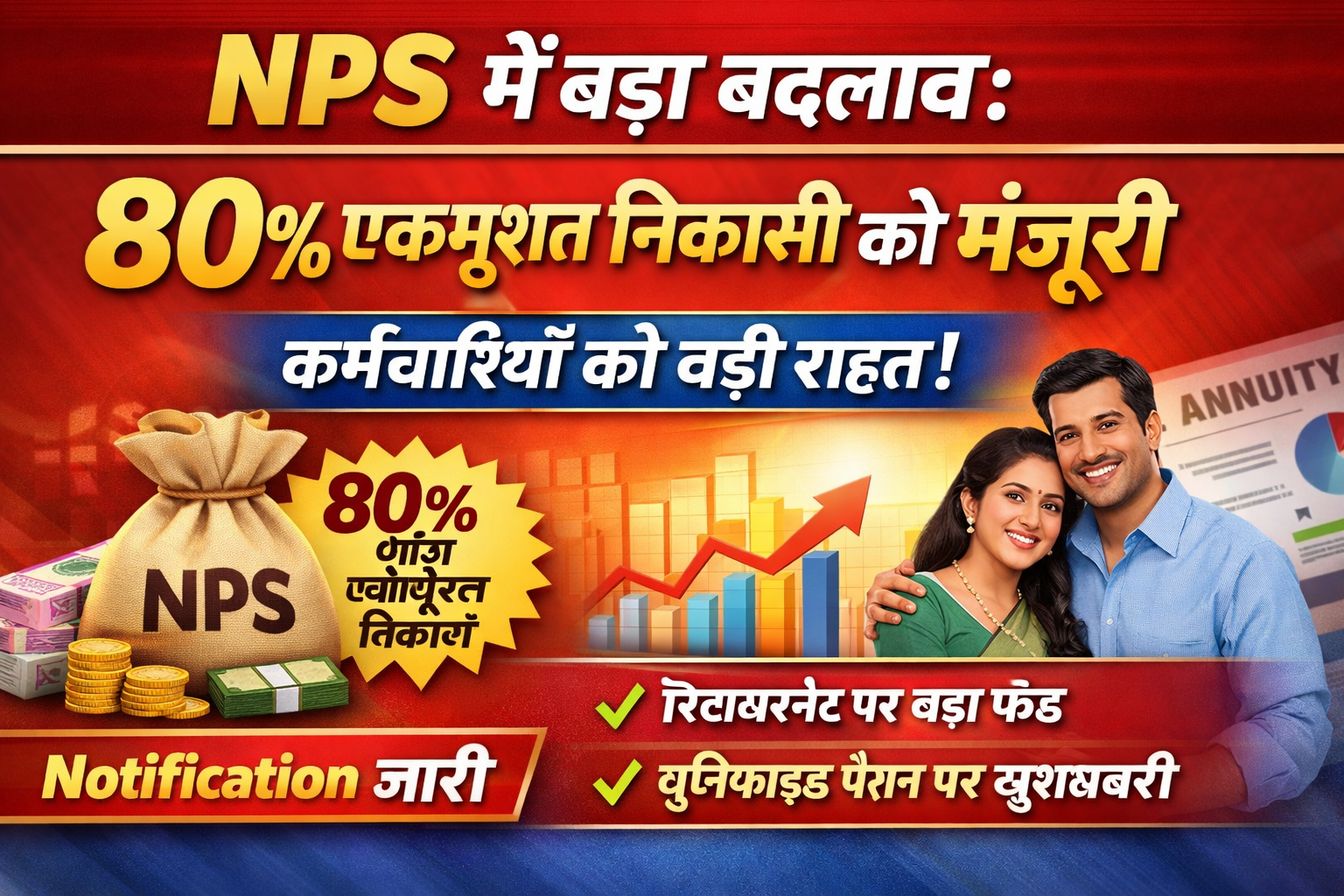
This guide explains the Government of India Office Memorandum (dated 29 October 2025) on voluntary retirement for Central Government employees who have opted for the Unified Pension Scheme (UPS/NPS). Key points: a subscriber may seek voluntary retirement after 20 years’ regular service by giving at least 3 months’ written notice; the appointing authority may accept, refuse or permit curtailment of notice on merits; voluntary retirement before 25 years gives pro-rata assured payout under PFRDA rules, while on/after 25 years it gives full assured payout. The rule excludes some special schemes and absorptions.
Primary keywords to target
- voluntary retirement NPS UPS
- voluntary retirement central government rules 2025
- Rule 13 voluntary retirement UPS
- pro-rata assured payout NPS
- how to submit voluntary retirement notice government job
Suggested article structure (for SEO and readability)
- Introduction — what this OM covers (100–150 words)
- Who can apply — eligibility (short bullets)
- Step-by-step process to apply (numbered steps)
- Notice period, curtailment & acceptance (detailed)
- Withdrawal of notice — rules & timing
- Effect on pension / payout (pro-rata vs full)
- Exceptions and who is excluded
- Practical tips and checklist before applying
- FAQs (structured for featured snippets)
- Conclusion & call to action
Full article (step-by-step)
1. Introduction
An Office Memorandum issued by the Department of Pension and Pensioners’ Welfare (dated 29 October 2025) clarifies entitlement and procedure for voluntary retirement from Government service in respect of Central Government servants who have opted for the Unified Pension Scheme (UPS) under the National Pension System (NPS). This guide breaks the rules down into simple actionable steps, explains impact on payout entitlement, and highlights exceptions.
2. Who is eligible?
- Any Central Government civil employee covered under UPS/NPS.
- The rule specifically allows voluntary retirement after completion of 20 years’ regular service.
- Note: Certain categories are excluded (see “Exceptions” below).
3. Step-by-step process to apply for voluntary retirement
Step 1 — Confirm eligibility
- Verify you are a UPS/NPS subscriber and that you have completed 20 years’ regular service.
Step 2 — Prepare the written notice
- Draft a written notice stating your intention to retire voluntarily. The normal requirement is at least 3 months’ notice to the appointing authority.
Step 3 — Submit the notice
- Hand over the notice in writing to your appointing authority (keep an acknowledged copy or proof of submission).
Step 4 — Await decision or acceptance
- The appointing authority may accept the notice (grant permission) or may refuse. If permission is granted before the notice period expires, retirement becomes effective on the date allowed by the authority.
Step 5 — Request for curtailment (if needed)
- If you want less than three months’ notice, submit a written request providing reasons. The appointing authority may curtail the notice period on merits if it causes no administrative inconvenience.
Step 6 — Withdrawal request (if you change your mind)
- To withdraw a previously given notice, seek specific approval from the appointing authority. A withdrawal request should be made at least 15 days prior to the intended date of retirement.
Step 7 — Settlement and payout
- Depending on your qualifying service at the date of retirement, the payout will be processed under PFRDA regulations (pro-rata or full assured payout — see section 6).
4. Notice period, curtailment & acceptance — what you must know
- Standard notice: Minimum 3 months written notice to the appointing authority.
- If appointing authority refuses: The retirement does not take effect until the period specified in the notice ends — i.e., if permission is not granted before expiry, retirement becomes effective from the expiry date.
- Curtailment: You can request acceptance of less than three months’ notice by providing reasons; authority may relax the requirement if administrative convenience is not affected.
- Acceptance: Even if you submit notice, retirement must be accepted by the appointing authority in line with the rules.
5. Withdrawal of voluntary retirement notice
- A subscriber who has given notice is generally precluded from withdrawing that notice unless they obtain specific approval of the appointing authority.
- The request to withdraw must normally be made at least 15 days before the intended date of retirement.
6. Effect on pension / payout — pro-rata vs full assured payout
- If you retire before completing 25 years of qualifying service: You will be entitled to a pro-rata assured payout admissible under the Pension Fund Regulatory and Development Authority (PFRDA) regulations (Operationalisation of UPS under NPS).
- If you retire on or after 25 years of qualifying service: You will be entitled to the full assured payout admissible under PFRDA regulations.
- In short: 25 years is the threshold for full assured payout.
7. Exceptions — who this rule does NOT apply to
This voluntary retirement rule does not apply to subscribers who:
- (a) retire under the Special Voluntary Retirement Scheme (SVRS) for surplus employees (as per the Department of Personnel & Training OM dated 28 Feb 2002, as amended), or
- (b) retire from government service because they are absorbed in an autonomous body or a public sector undertaking.
Always check whether any other specific rules or departmental orders affect your case.
8. Practical checklist before you apply
- Confirm UPS/NPS status and collect your PRAN and account details.
- Verify your total qualifying service (especially if near 25 years).
- Prepare a formal notice letter (date, PRAN, designation, expected date of retirement).
- Keep copies and proof of submission.
- If applying for curtailed notice, prepare a short justification letter.
- Consult your ministry/department personnel section or legal cell to understand any department-specific processes.
- Check consequences for gratuity, leave encashment, medical cover and other service benefits in your department.
9. FAQs (ready for featured snippet)
Q: When can I apply for voluntary retirement under UPS/NPS?
A: After completing 20 years’ regular service, by giving at least 3 months’ written notice to the appointing authority.
Q: Can I get voluntary retirement with less than 3 months’ notice?
A: Yes — the appointing authority may allow curtailment based on merit and administrative convenience if you submit a request.
Q: Can I withdraw my retirement notice?
A: Withdrawal is possible only with specific approval of the appointing authority and should be requested at least 15 days before the intended retirement date.
Q: Will I get full payout if I retire voluntarily?
A: You get pro-rata payout if you have less than 25 years of qualifying service; full assured payout if you have 25 years or more.
Q: Does this rule apply if I take SVRS or get absorbed into PSU?
A: No. The rule excludes those who retire under SVRS or are absorbed in an autonomous body/PSU.
10. Conclusion & call to action
Voluntary retirement under UPS/NPS gives eligible Central Government employees a clear route to leave service after 20 years, but the notice rules, payout consequences and department approvals require careful planning. If you’re considering voluntary retirement, check your service length, consult your personnel section, prepare the required documents, and weigh the financial impact (pro-rata vs full payout) before submitting your notice.
.jpeg)
.jpeg)
.jpeg)
.jpeg)
.jpeg)
.jpeg)
.jpeg)

.jpeg)




.png)


.png)